

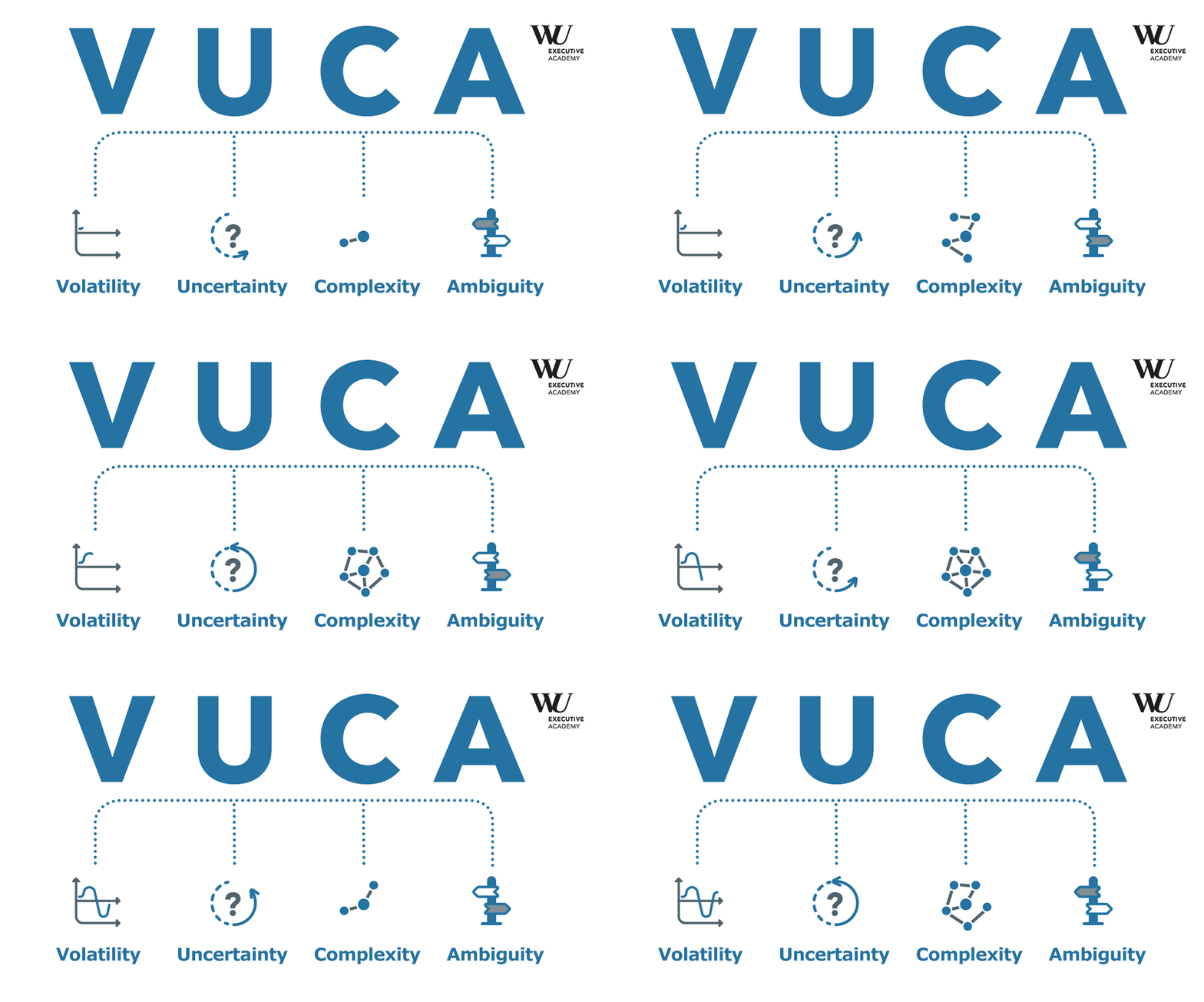
In a world characterized by volatility, query, complexity, and nebulosity (VUCA), leadership has taken on a new position of significance. Conforming leadership styles to address the challenges of a VUCA terrain is essential for guiding brigades through query and icing organizational success. This composition explores colorful leadership styles that are particularly suited for VUCA surrounds, while also probing into conflict operation strategies to maintain cohesion in tumultuous times.
Contents ⤵️
- 1 Understanding VUCA surroundings
- 2 Conforming Leadership Styles for VUCA surroundings
- 3 Adaptive Leadership
- 4 Menial Leadership
- 5 Agile Leadership
- 6 Authentic Leadership
- 7 Case Studies Leadership Styles in Action
- 8 Developing amulet-Style Leadership Approach
- 9 Building Leadership Resilience
- 10 Training and Development for VUCA Leadership
- 11 Ethical Considerations in VUCA Leadership
- 12 Conclusion
Understanding VUCA surroundings
VUCA, comprising volatility, query, complexity, and nebulosity, has come synonymous with the ultramodern business geography. Diligence subject to rapid-fire changes and dynamic shifts frequently find themselves facing these challenges.
Conforming Leadership Styles for VUCA surroundings
Transformational Leadership
Transformational leadership thrives in a VUCA world by inspiring and motivating armies during times of conflict management. Leaders with this style encourage invention and promote a shared vision, helping armies navigate through changeable periods while effectively addressing and resolving conflicts that arise.
Adaptive Leadership
Adaptive leadership principles revolve around guiding brigades through complex and nebulous situations. Adaptive leaders promote inflexibility, trial, and literacy, enabling associations to thrive in uncertain circumstances.
Menial Leadership
Menial leadership’s emphasis on empathy and support is inestimable in VUCA settings. By putting the requirements of their platoon members first, menial leaders foster adaptability and a sense of concinnity within the platoon.
Agile Leadership
Agile leaders are quick decision- makers who exceed in unpredictable surroundings. Their capability to acclimatize to change and pivot strategies helps associations navigate through unanticipated shifts with ease.
Authentic Leadership
Authentic leaders make trust and translucency, making them essential in nebulous situations. Their genuine approach fosters open communication, icing brigades stay informed and aligned.
Case Studies Leadership Styles in Action
Real- world exemplifications demonstrate the effectiveness of different leadership styles in VUCA scripts. Companies employing these styles have successfully navigated query, showing the impact of protean leadership on organizational adaptability and growth.
Developing amulet-Style Leadership Approach
Feting that no single leadership style fits all situations, leaders must develop amulet-style approach. The capability to switch between styles grounded on environment is pivotal in effectively leading brigades through the different challenges presented by a VUCA world.
Building Leadership Resilience
Leading in a VUCA world requires adaptability. Leaders must maintain their well- being to effectively guide their brigades. Prioritizing tone- care, nonstop literacy, and stress operation are essential for sustained leadership success.
Training and Development for VUCA Leadership
Leadership development programs play a vital part in cultivating adaptable leaders. Training that focuses on chops similar as decision- making under query, conflict resolution, and emotional intelligence equips leaders to exceed in VUCA surroundings.
Ethical Considerations in VUCA Leadership
Ethical decision- making earnings lesser complexity in VUCA settings. Leaders must prioritize ethical values and integrity to maintain trust within their brigades and uphold the association’s character.
Conclusion
Navigating a VUCA world demands leaders who can embrace diversity and rigidity. By understanding and exercising a diapason of leadership styles while enforcing effective conflict operation strategies, leaders can guide their brigades successfully through the challenges posed by volatility, query, complexity, and nebulosity. In a world where change is constant, evolving leadership approaches is essential for achieving sustained success