

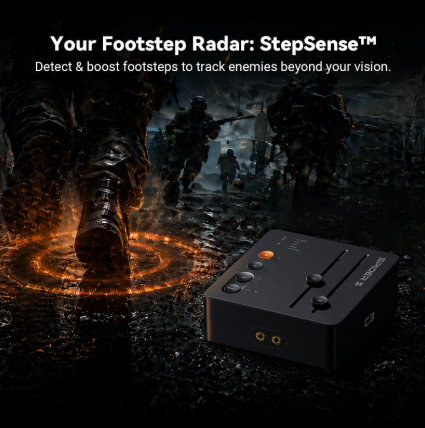
A setup that flatters your favourite album can quietly work against you in a ranked match, and a chain tuned for competition can make a Sunday listening session feel oddly clinical. Players who also love music run into this sooner or later and often blame their gear, when the real issue is simpler: the two activities reward different things, sometimes opposite things. The difference starts with what game audio is mixed for. A song is a finished object, mixed once, forever. A game’s mix is built live, out of hundreds of sounds competing for your attention, and it has a job to do.
Understanding the two sets of priorities lets you build one setup that serves both — with a couple of honest compromises and two saved presets instead of two separate rigs.
What music listening rewards
Music listening is about the whole. Tonal balance that flatters voices and instruments, bass with weight and texture, a soundstage that feels like a room rather than a diagram, and above all a presentation you can sink into for an hour without fatigue. Listeners forgive a lot in pursuit of that feeling: a warm tilt, a little extra low-end glow, imaging that is pleasing rather than precise. The recording is the entire experience, so everything in the chain is judged by whether the experience moves you.
What games reward instead
In game audio, the mix is dynamic and functional. A footstep at your four o’clock is not atmosphere; it is data. So the priorities reorder themselves: precise imaging over pleasing stage, separation under chaos over blend, clarity in the midrange where cues live, and a low end kept lean enough that it never masks them. Explosions are allowed to be felt, but they are not allowed to hide the reload behind them. A presentation that sounds a touch dry for music is often exactly right for play, and it is not a flaw in either direction — it is two different definitions of good.
Where the gear overlaps
Fortunately, the foundations are shared, and this is the part nobody needs to buy twice:
- Headphones with low distortion and a comfortable fit serve an album and a long session equally.
- A clean, adequately powered source stage: hiss and strain hurt a quiet piano passage and a stealth section in the same way.
- Honest midrange: voices, instruments and in-game callouts all live there.
A clean DAC and amplifier stage helps game audio and music alike, because both are asking for the same thing underneath — the recording, or the mix, delivered without anything added or smeared on the way. Shared foundations, separate seasoning — that is the whole arrangement.
Tuning two profiles
The practical solution is one chain, two tunings. Save one EQ profile for music — flat, or with the gentle warmth you enjoy — and one for game audio: a small low-bass trim to clear the masking, a slight lift where footsteps and handling sounds sit, nothing dramatic. Pair each with the right in-game or player settings: full dynamic range and the headphone mix for games, enhancements off for music. Switching profiles takes five seconds and removes the temptation to build a compromise tuning that serves neither activity well. Label them honestly; future you will not remember which was which.
Can one setup do both?
Yes, with the compromises in the right places. Choose headphones for comfort, honesty and imaging rather than for a party trick in either direction. Keep the chain clean and powerful enough that you are never listening to the hardware’s limits. Then accept the one genuine trade: the very last degree of musical warmth or competitive leanness comes from the preset, not the purchase. Players who listen a lot and listeners who play a lot both land in this same middle — one good rig, tuned per activity — and it is a comfortable place to land.
There is one more honest wrinkle: volume. Long listening sessions reward restraint — ears that are fresh at hour two still hear detail, while ears blasted since minute one hear progressively less of everything. Players chasing cues tend to creep the level up as concentration fades, which is exactly backwards. A chain with headroom lets you stay at a sane level without the sound collapsing, and that serves a late-night album and a final-circle fight in precisely the same way.
Decide by your hours. If most of your listening time is matches, prioritise game audio and let music be very good rather than perfect; if the ratio runs the other way, reverse it. Either way, when you go looking for the shared foundation both activities stand on, a game audio collection is a sensible place to compare clean, versatile gear that will not embarrass an album after the match ends.